

Overview
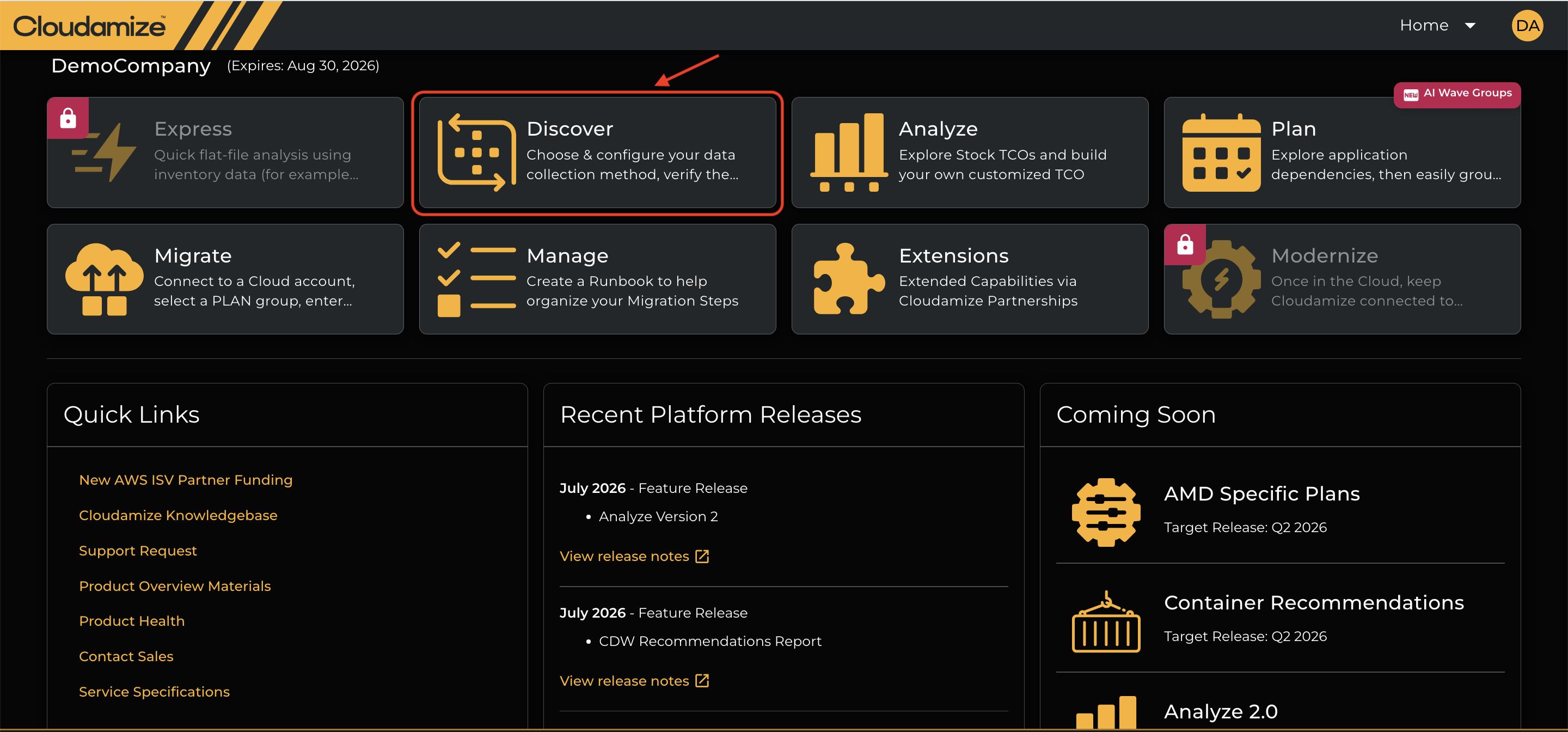
Once you have configured your assessment and added all the necessary infrastructure, you are ready to start collecting data. To access the Assessment tab, click on the “Discover” option on the Cloudamize Landing Page.
The Assessment tab will provide you with the Start Assessment option, which will look like this:
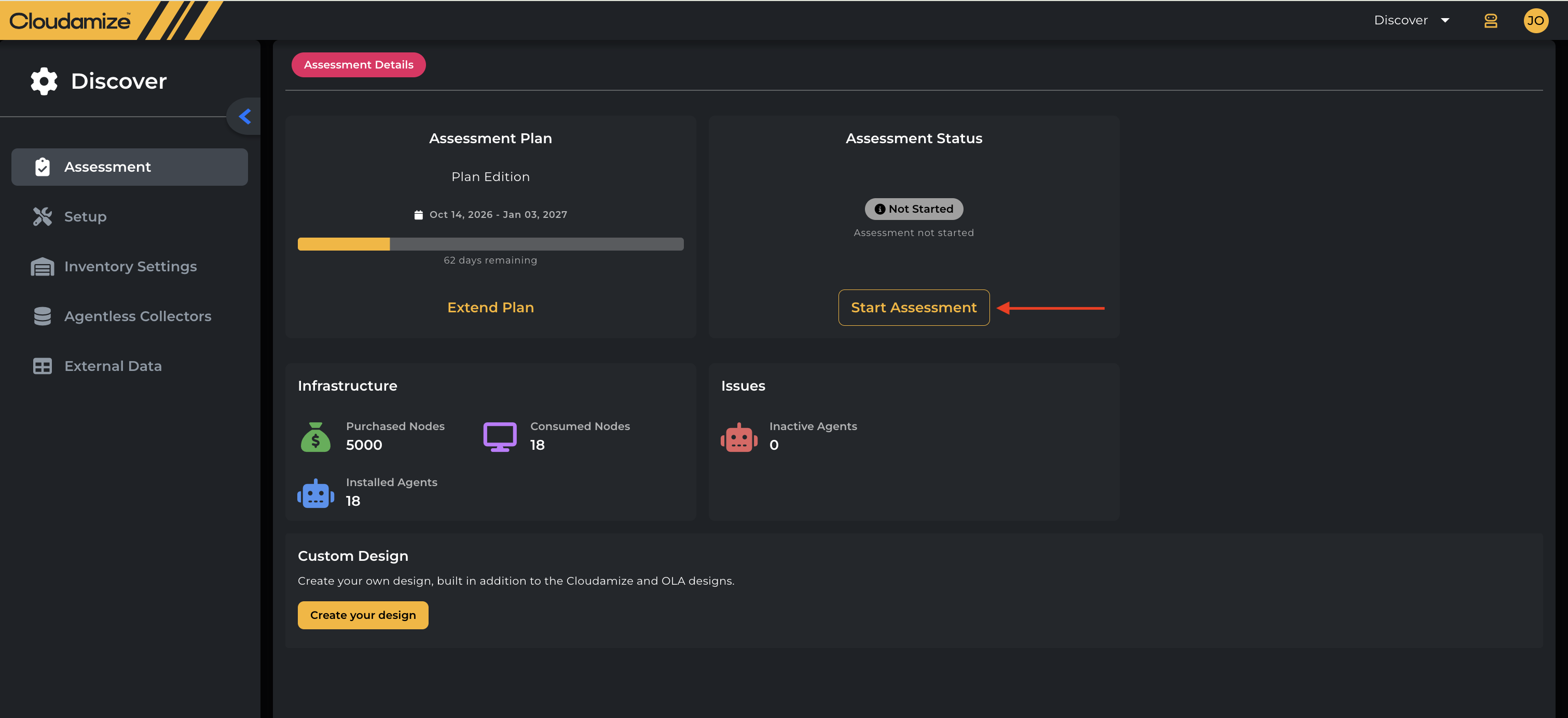
Click on the Start Assessment button (highlighted above) to begin the process of starting data collection.
Note: The Start Assessment option will be enabled only after a minimum of 6 nodes have been added to the console.
Starting the Assessment, Step-by-Step
Starting the Assessment consists of three stages:
Stage 1: Review Node Counts

The new side-panel flow during Step 1: Node Summary gives real-time visibility into your node counts and data collection health before launching an assessment:
-
Infrastructure Counts: Quickly review Purchased Nodes, Consumed Nodes, and Installed Agents.
-
Amber Data Collection Warning: Displays when a portion of your physical nodes are not sending data (e.g., "3 of 6 physical nodes (50%) are not collecting data").
-
Potential Impacts Summary: Highlights how non-collecting nodes affect your results:
-
Lower-resolution application interconnectivity data in Migration Planner.
-
Less accurate right-sizing and cost estimates.
-
No recommendations generated for instances with inactive agents.
-
-
Non-Collecting Nodes Collapsible List: Expand Non-Collecting Nodes → Physical Infrastructure to identify affected nodes.

-
Proceeding Choice: Click Confirm anyway to proceed despite incomplete data, or Cancel to fix agent issues first.
Cloudamize refers to servers you have added to the Assessment as “nodes”. In this first stage, you can review the following values:
-
Purchased Nodes: The total number of licenses purchased for this Assessment, i.e., the maximum number of servers that can have assessment results published in this Assessment.
-
Consumed Nodes: The current number of licenses that will be used with the given settings, i.e., the number of servers that are included in the Assessment scope.
-
Installed Agents: The current number of servers added to the Assessment via one or more data collection methods (Agent, Agentless, etc). This includes both in-scope and out-of-scope servers.
If the number of Consumed Nodes is greater than the number of Purchased Nodes, you won’t be able to move to the next step, and the “Next” button will be disabled.
Assessment Blocked (0 Nodes Collecting Data)
Visual State: Red Banner Alert
-
Behaviour: When no physical nodes are actively sending data, the assessment flow is completely blocked.
-
Error Message:
No physical nodes are collecting data. Resolve agent issues before starting. -
Action Required: You cannot proceed past Step 1. Agent issues must be resolved on affected nodes before the assessment can be started.

Scenario 1: Fully Virtual Environment with Partial vCenter Data Collection
Some vCenters are successfully collecting data, while one or more vCenters have a data collection issue. The assessment can proceed after acknowledging the potential impact of incomplete data collection.

Scenario 2: Fully Virtual Environment with All vCenters Collecting Data
All vCenters are successfully collecting data. The assessment can proceed normally without any data collection warnings or additional acknowledgement.

Scenario 3: Fully Virtual Environment with No vCenters Collecting Data
None of the vCenters are successfully collecting data. The assessment cannot be started until the vCenter data collection issues are resolved.

Scenario 4: Fully Virtual Environment with No Recorded vCenter Collection Status
No data collection status is currently available for the vCenters, indicating that collection activity has not yet been recorded. The assessment cannot be started until vCenter data collection is successfully established and its status is available.

Scenario 5: Mixed Environment with Partial Data Collection
In a mixed environment, 8 of 12 physical nodes and 2 of 3 vCenters are successfully collecting data. The Review step displays both Physical Infrastructure and Virtual Infrastructure sections, allowing you to identify the infrastructure that is not collecting data. The assessment can proceed after acknowledging the potential impact of incomplete data collection.


Scenario 6: No Physical Nodes Collecting, but Some vCenters Are Collecting
None of the 12 physical nodes are collecting data, but 2 of 3 vCenters are successfully collecting data. The assessment can proceed because data is being collected from the virtual infrastructure. An acknowledgement of the potential impact of incomplete physical infrastructure data may be required before continuing.


Scenario 7: No Infrastructure Collecting Data
None of the 12 physical nodes or 3 vCenters are collecting data. Because no infrastructure is actively collecting data, the assessment cannot be started. Resolve the data collection issues before proceeding.

Inspecting Non-Collecting Physical Nodes
Visual State: Expanded Non-Collecting Nodes list.
-
Behavior: Clicking on Non-Collecting Nodes → Physical Infrastructure expands a detailed inventory table of affected devices.
-
Node Information Displayed:
-
Hostname: Specific server identifier (e.g.,
ip-172-31-25-32.ec2.internal,EC2AMAZ-KJHVV22). -
Operating System: Node OS (e.g.,
LINUX,WINDOWS). -
Agent State: Visual status icon.
-
Reason: Failure diagnostic (e.g.,
Agent is not collecting data).
-
-
Built-in Search: Use the search bar to filter specific nodes by hostname or OS.

Stage 2: Select Assessment Regions
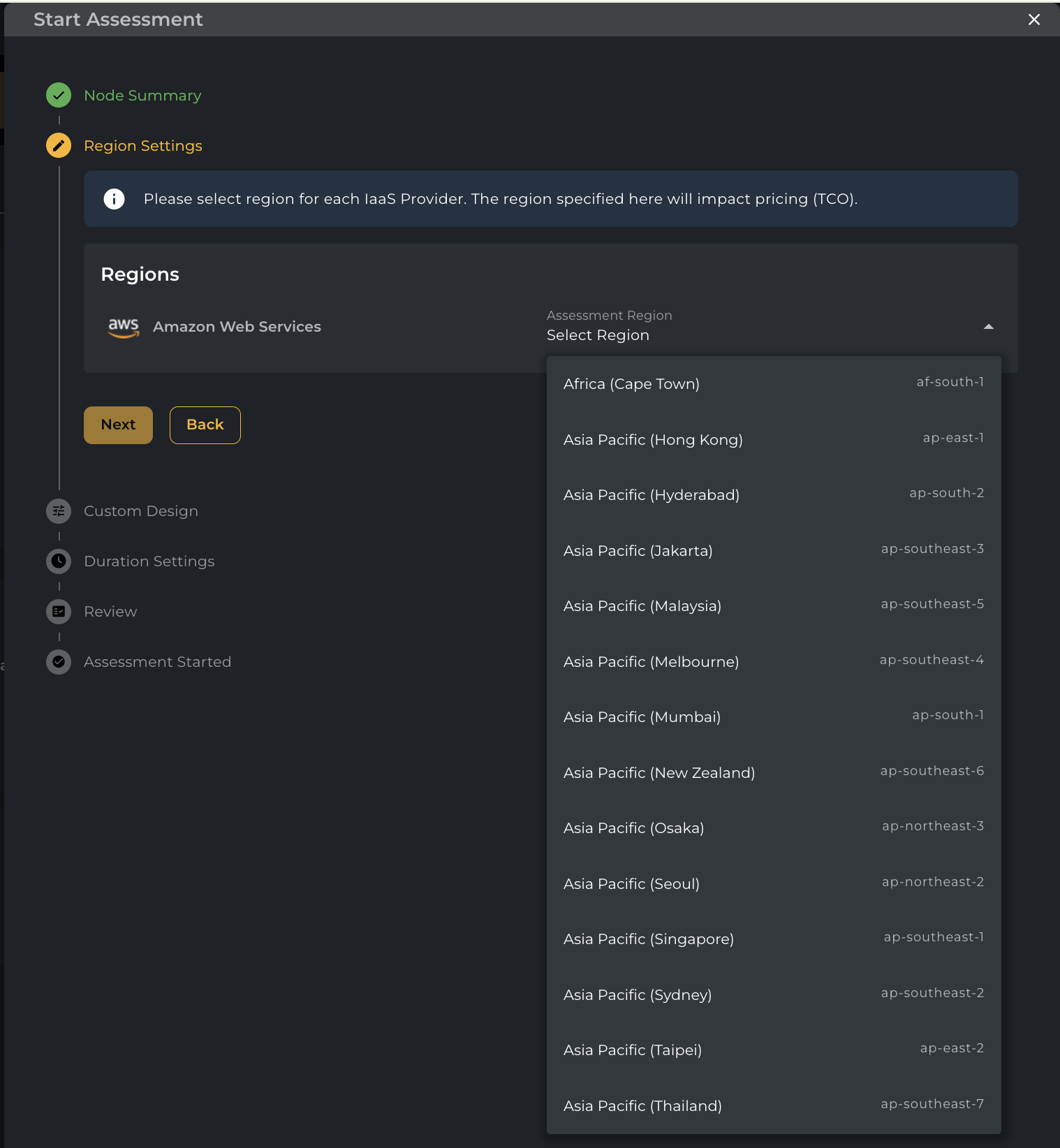
On this screen, you will see a list of Cloud Service Providers (CSP) that are available for this Assessment, and a Region dropdown menu will be visible next to each of them.
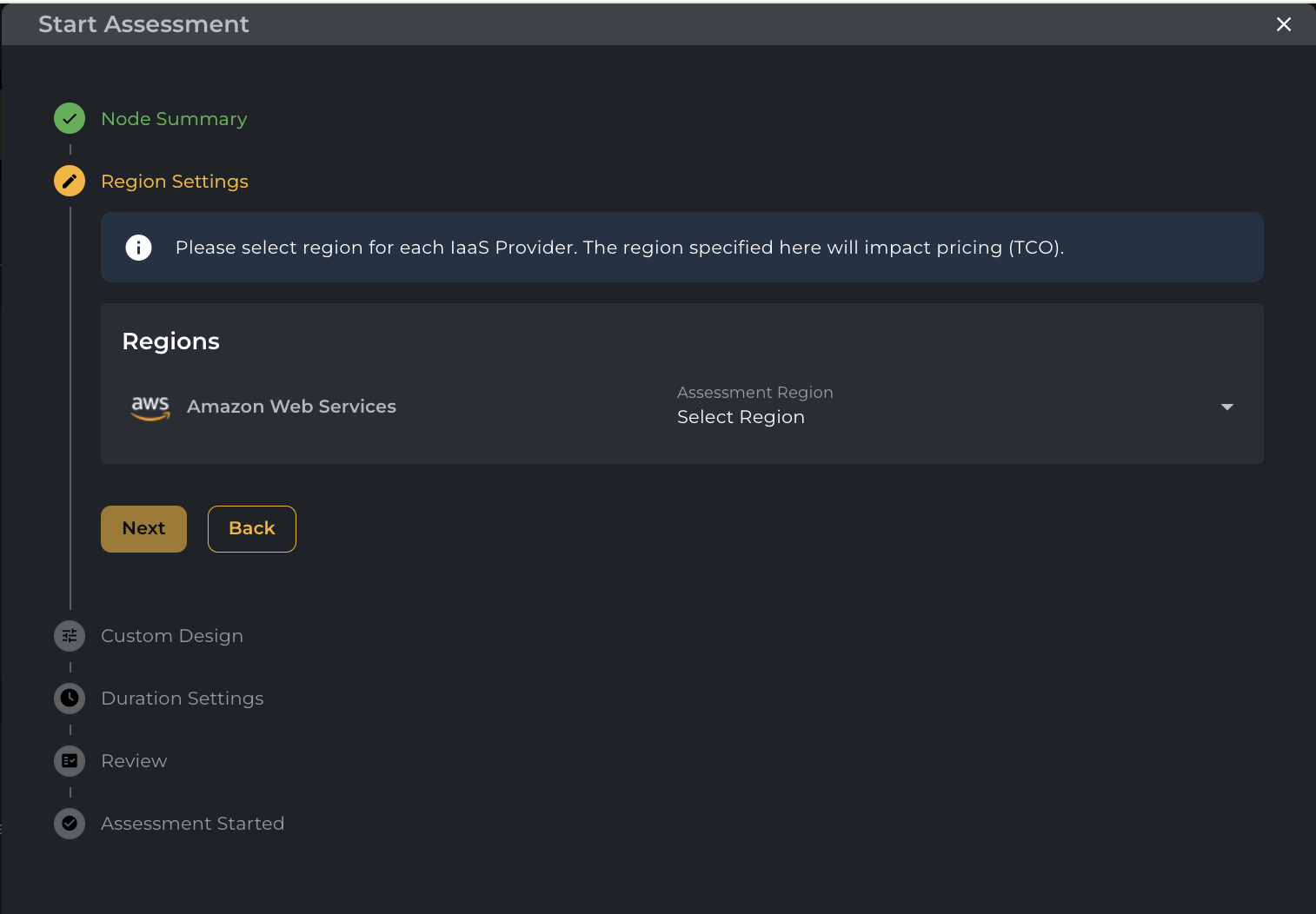
You should select the default region for cloud recommendations to be based on for each CSP. The Total Cost of Ownership (TCO) and cloud instance recommendations (i.e., the assessment deliverables) will be built using the selected region, basing results on the availability and cost of cloud instance types in that region.
Stage 3: Custom Design (AWS Only)
Note: Custom designs are for AWS only. When AWS is selected as a target cloud provider, this step is mandatory and cannot be skipped. It is automatically bypassed only when AWS is not selected. Your custom design is built in addition to the standard Cloudamize and OLA designs, appears under Custom Designs, and can be changed later.
In this step, define your initial custom right-sizing and pricing design. For a full breakdown of every setting, see Designer 2.0 Lite (AWS).
Mandatory Step: This step is required when AWS is selected; there is no Skip option.
No Preselections: By default, nothing is preselected when opening the form. A design can only be saved once every setting has been chosen.
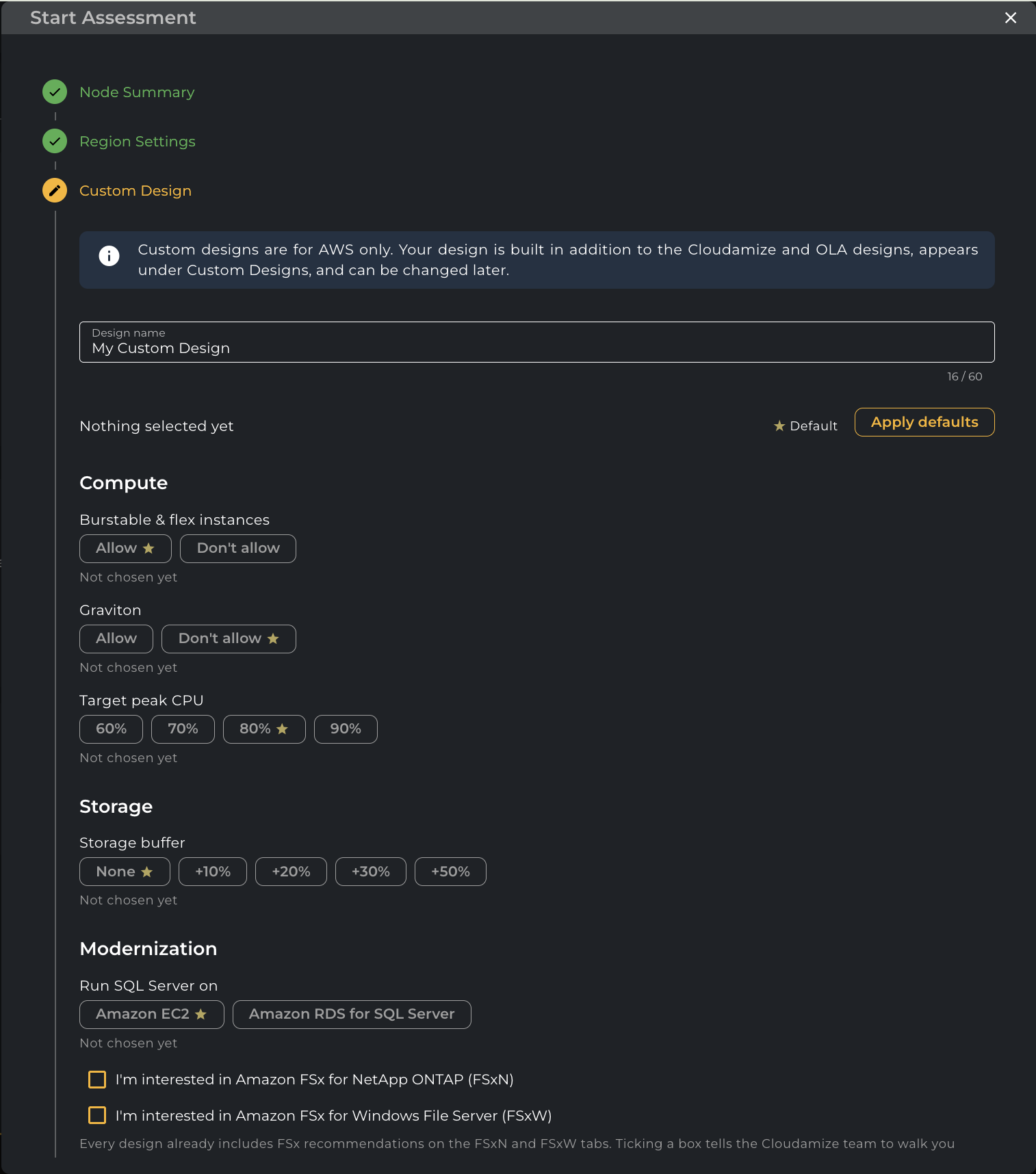
Apply Defaults: Click "Apply defaults" to populate every setting with recommended baseline values automatically. A faint yellow star marks the default choice for each setting.
-
Design Name: Enter a unique name for your custom design (up to 60 characters).
-
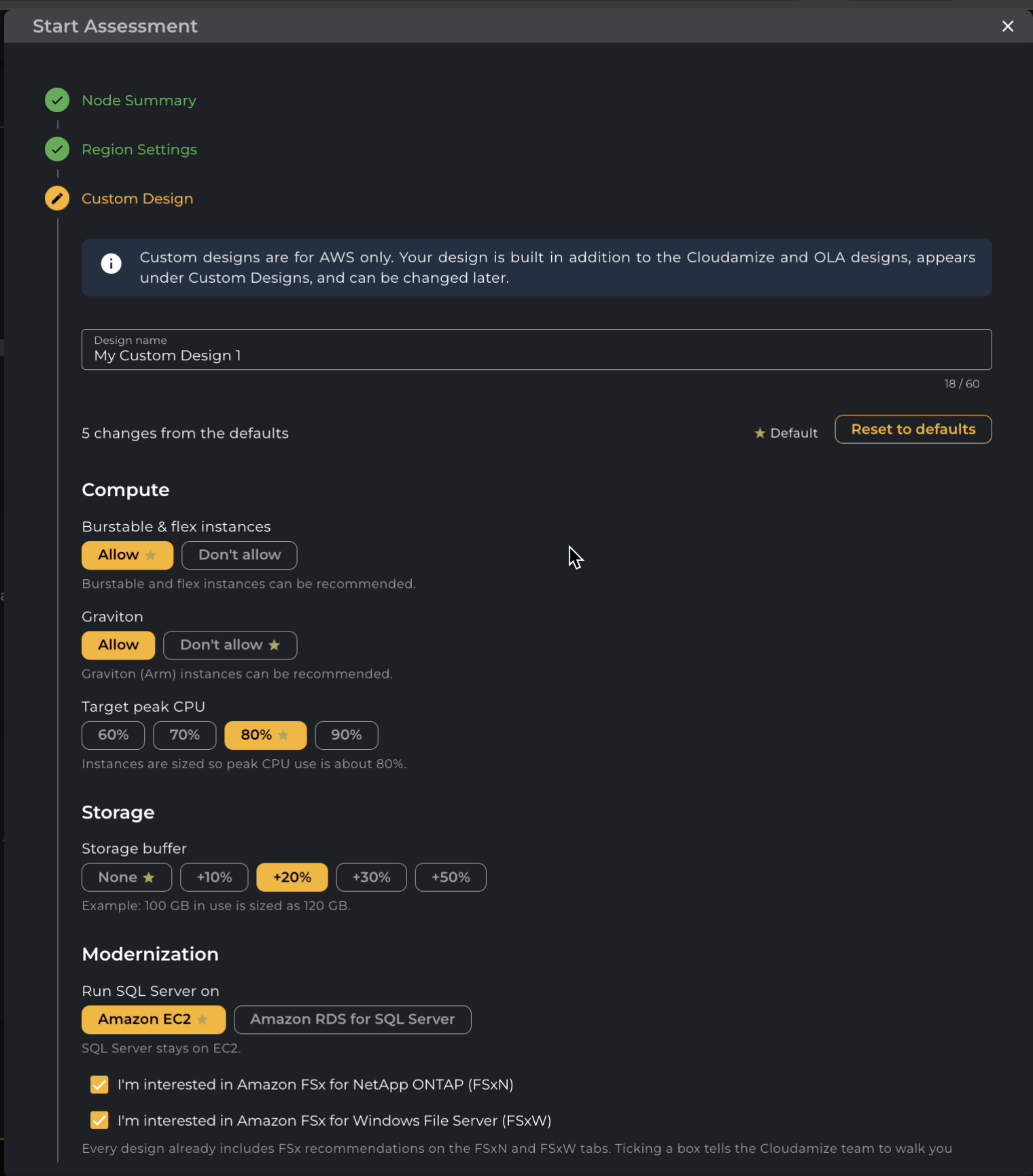
Defaults Indicator: The interface tracks your modifications (e.g., "5 changes from the defaults"). A faint yellow star marks the default value for each setting.
-
Reset to Defaults: Once any setting is modified, the button changes to "Reset to defaults", allowing you to revert all fields to standard baseline options at any time.
Configuration Settings:
-
Compute
-
Burstable & flex instances: Allow (Default) or Don't allow. Determines whether burstable/flex instances (such as T-series) can be recommended.
-
Graviton: Allow or Don't allow (Default). Allows ARM-based AWS Graviton instances to be recommended (disabled if Intel or AMD is explicitly selected).
-
Target peak CPU: 60%, 70%, 80% (Default), 90%. Instances are sized so peak CPU use targets this threshold (e.g., 80% target reserves 20% headroom).
-
-
Storage
-
Storage buffer: None (Default), +10%, +20%, +30%, +50%. Adds buffer headroom across all EBS volumes (e.g., selecting +20% sizes 100 GB in use as 120 GB). Does not apply to FSx.
-
-
Modernization
-
Run SQL Server on: Amazon EC2 (Default) or Amazon RDS for SQL Server. Choose whether SQL Server workloads stay on EC2 or modernize to Amazon RDS for SQL Server.
-
Amazon FSx Interest: Checkboxes for "I'm interested in Amazon FSx for NetApp ONTAP (FSxN)" and "I'm interested in Amazon FSx for Windows File Server (FSxW)". Every design already includes FSx recommendations on the FSxN and FSxW tabs; checking these boxes records your modernization interest for the Cloudamize account team.
-
-
Pricing
-
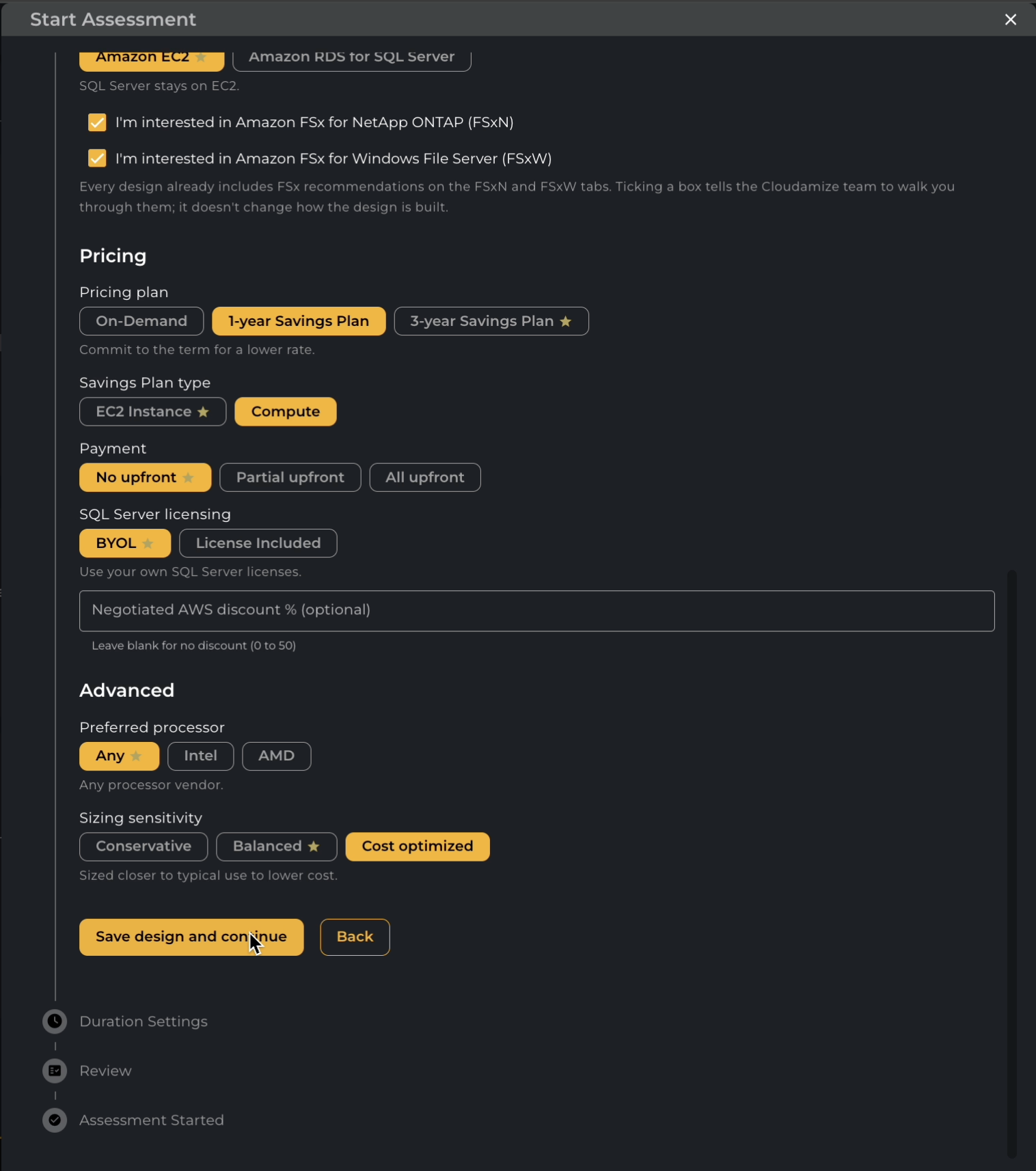
Pricing Plan & Term: On-Demand, 1-year Savings Plan, 3-year Savings Plan (Default: 3-year EC2 Instance Savings Plan, No upfront). Specify Compute or EC2 Instance Savings Plans with No Upfront, Partial Upfront, or All Upfront payment options.
-
SQL Server Licensing: BYOL (Default) or License Included.
-
Negotiated AWS Discount: Optional discount percentage from 0% to 50% (Default: None).
-
-
Advanced
-
Preferred Processor: Any (Default), Intel, AMD. Constrains compute recommendations to preferred processor architecture. Setting Intel or AMD disables the Graviton option.
-
Sizing Sensitivity: Conservative, Balanced (Default), Cost optimized. Governs utilization thresholds when sizing instance recommendations.
-
Click "Save design and continue" to proceed to Duration Settings.
Stage 4: Set Collection Duration and Delivery Date
Cloudamize will typically collect data over a period set by you before processing final results following the end of this data collection period, then deliver those results on a final date. At this stage, you can set these dates:
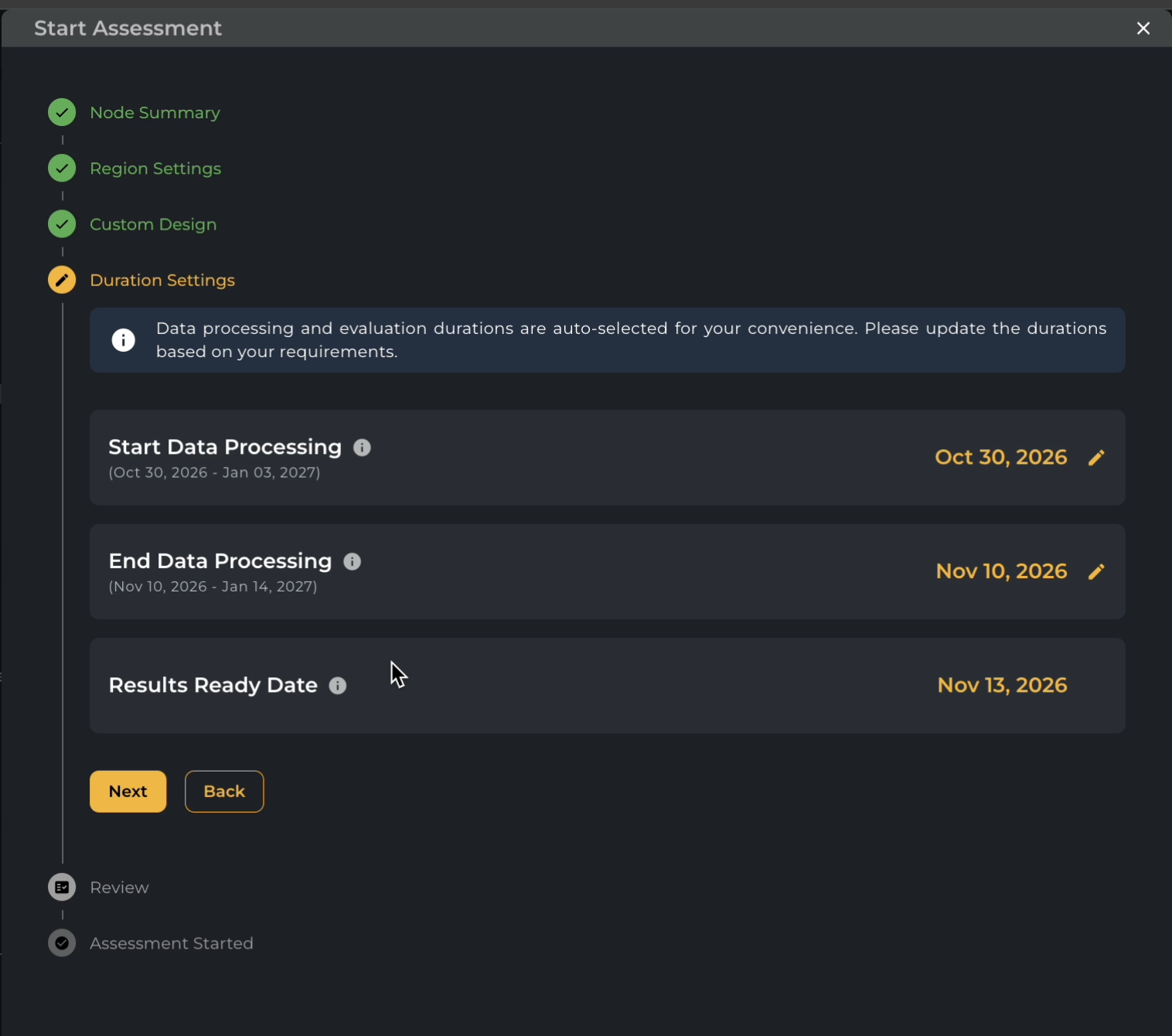
There are three dates here:
-
Start Data Processing: The date to begin collecting data that you wish to include in the Assessment results (defaults to today).
-
End Data Processing: The date to cease collecting data that you wish to include in the Assessment results (defaults to 11 calendar days from today, may vary based on availability).
-
Results Ready Date: The date that final results will be released and available to view. Defaults to 3 working days from the End Data Processing Date; may vary based on availability.
You may customize the Start and End Data Processing dates, though a minimum period of 11 days between them is enforced to allow sufficient data collection. You should aim to include any period of particular interest in this range (e.g., typical heavy usage periods, spikes, etc.) to allow for the most accurate results.
The Results Ready Date cannot be customized and is fixed to a minimum of 3 working days after the End Data Processing date (adjusted for availability). The cases in which this might be longer are as follows:
-
We may add additional days based on your infrastructure size and our current delivery load.
-
If we intentionally block days for any reason, that may also add to delivery days.
-
No deliveries take place on Weekends, being delayed to the start of the following week instead.
Stage 5: Review Configuration
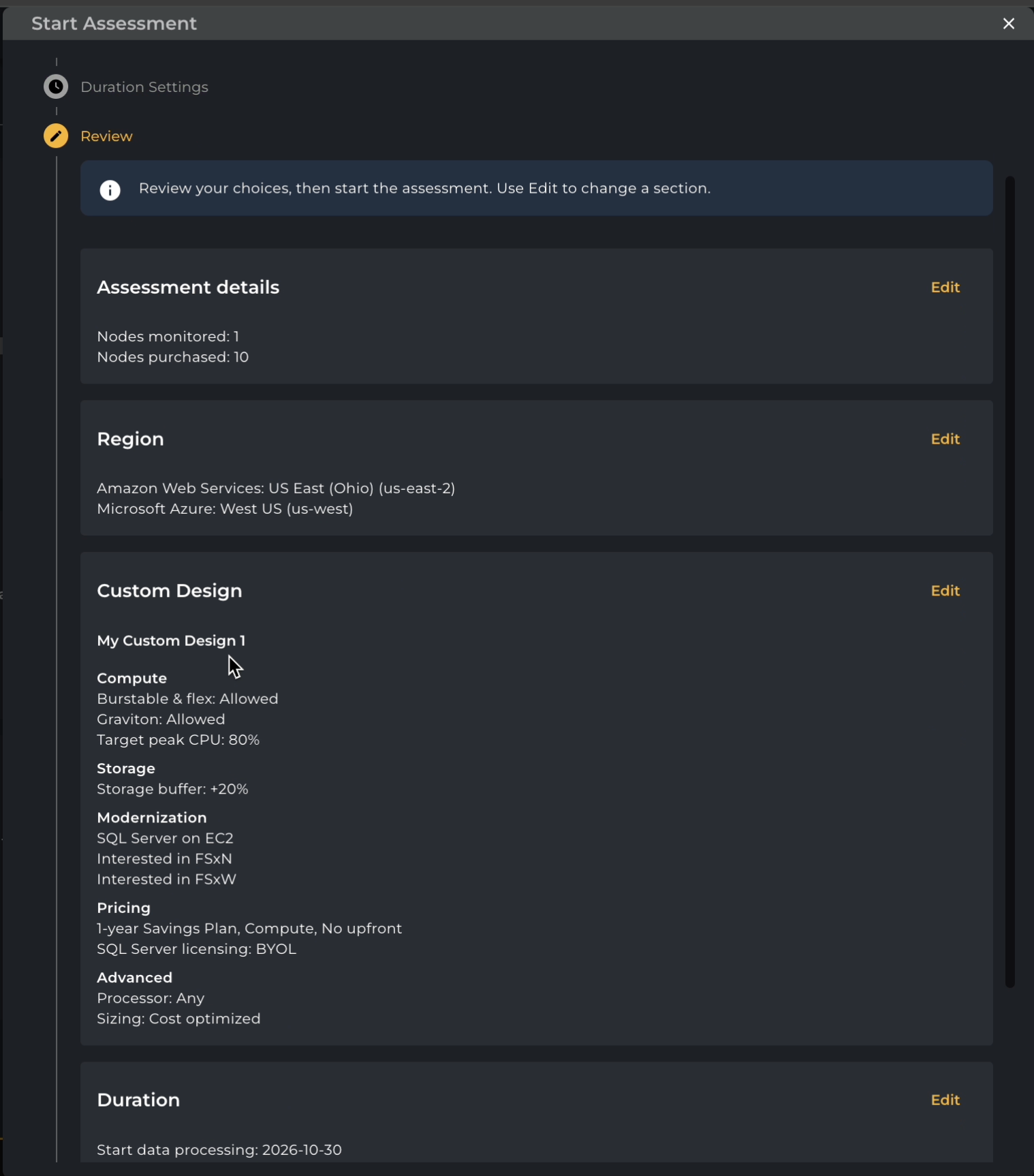
Before initiating data collection, the Review screen displays a comprehensive summary of all your configured choices across previous steps:
-
Assessment details: Displays total Nodes Monitored vs. Nodes Purchased. Click "Edit" to return to Step 1.
-
Region: Shows selected target regions per Cloud Service Provider (e.g., Amazon Web Services: US East (Ohio), Microsoft Azure: West US). Click "Edit" to return to Step 2.
-
Custom Design (AWS): Displays all configured parameters for your custom design (Design Name, Compute rules, Storage buffer, Modernization preferences, Pricing model, and Advanced processor/sensitivity choices). Click "Edit" to adjust design preferences.
-
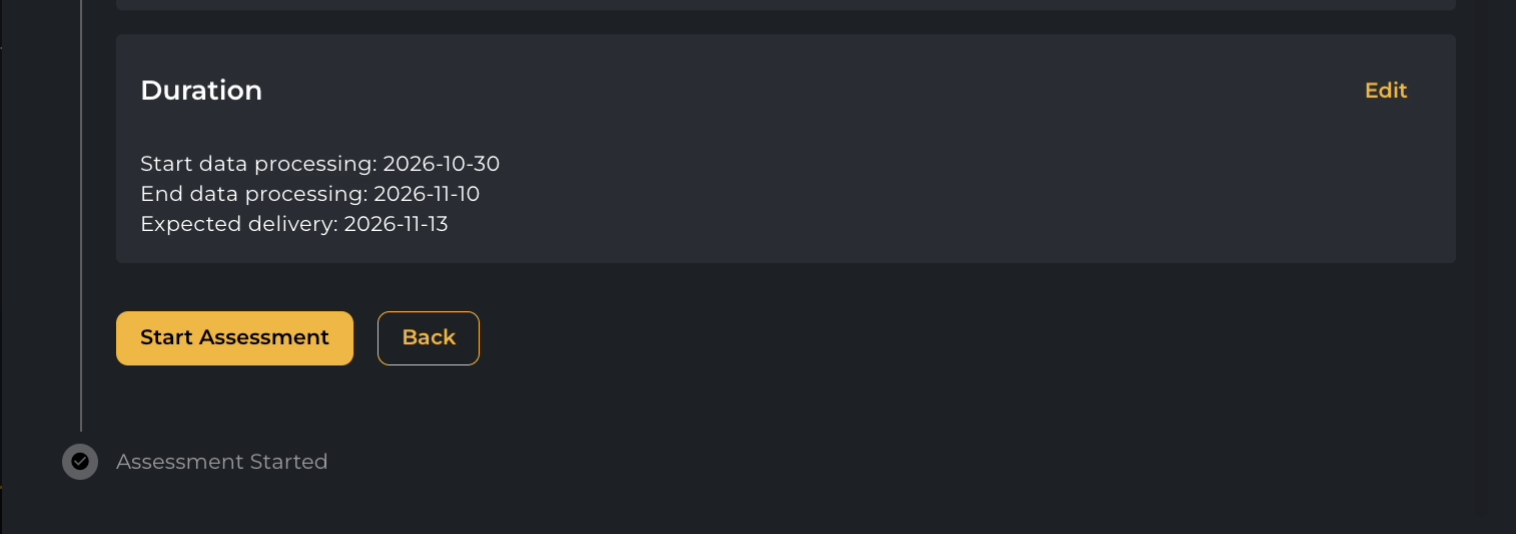
Duration: Summarizes your collection timeline (Start Data Processing date, End Data Processing date, and Expected Delivery date). Click "Edit" to adjust duration dates.
Starting the Assessment:
-
Review all sections to ensure configurations match your project scope.
-
Click "Start Assessment" in the bottom left corner.
-
The assessment transitions to the "Queued" state, and your custom design will be saved and built alongside the initial assessment results delivery.
Assessment Successfully Started
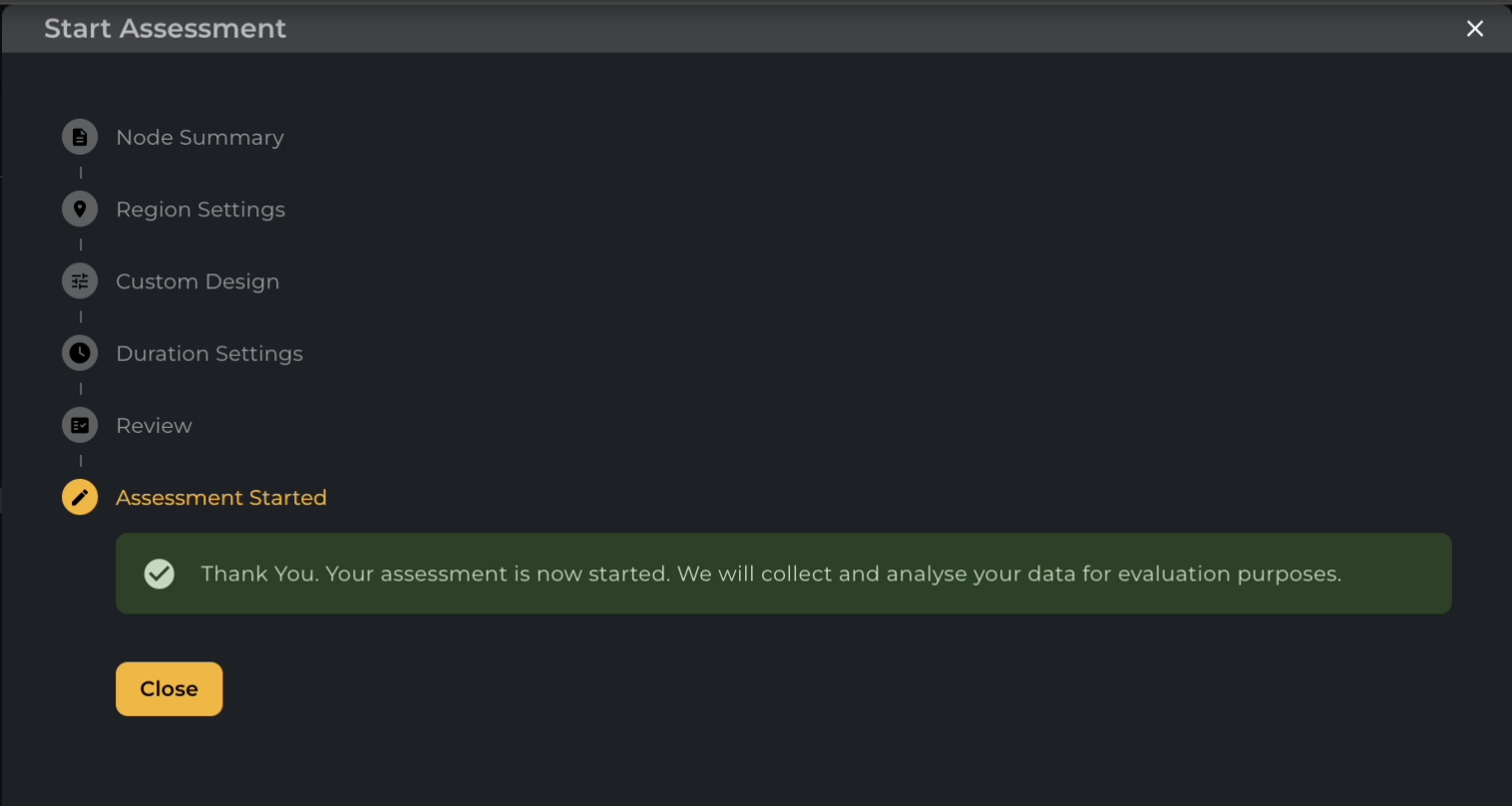
Once your Assessment is successfully started, you will see a confirmation screen:
Queued State:
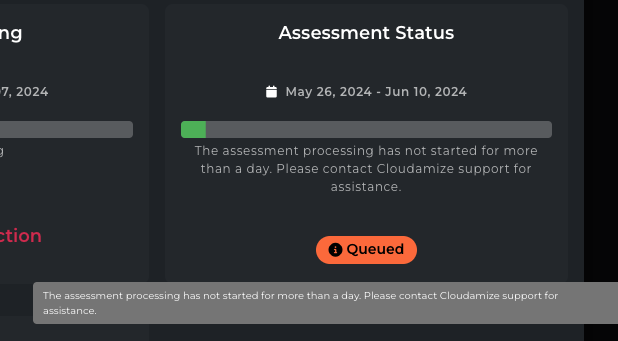
As soon as the assessment starts, you will see the screen below, showing the status as “queued” with the message “The assessment has started, and processing will start soon.” This Queued status will remain while the assessment is processed for preliminary results.
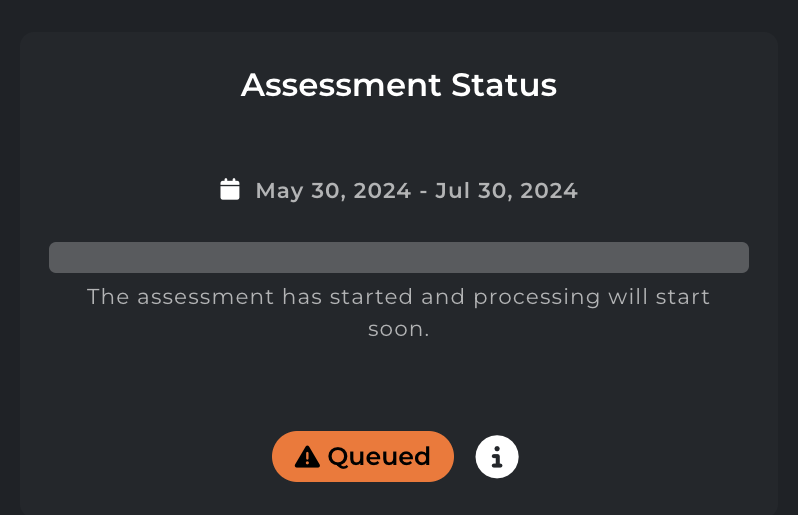
If preliminary results are not processed within 24 hours after starting the assessment, you will see the message “The assessment processing has not started for more than a day. Please contact Cloudamize support for assistance”. If you see this message, please send an email to helpdesk@cloudamize.com.
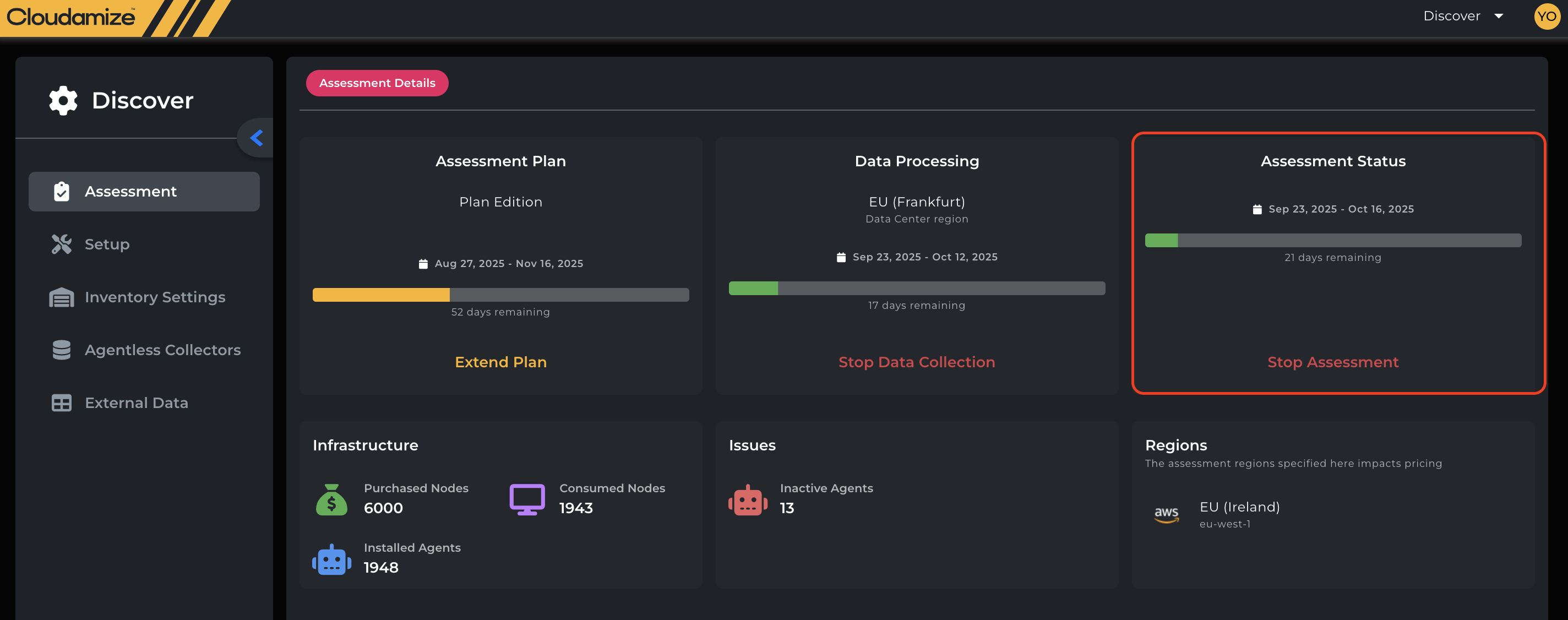
The assessment status will change once processing is complete, as shown in the screenshot below.
Stopping An Assessment
Stopping this assessment ends the current collection phase. To resume data collection, you must define a new date range.
Important: Data collected before stopping will not be carried over or included in the new assessment period.
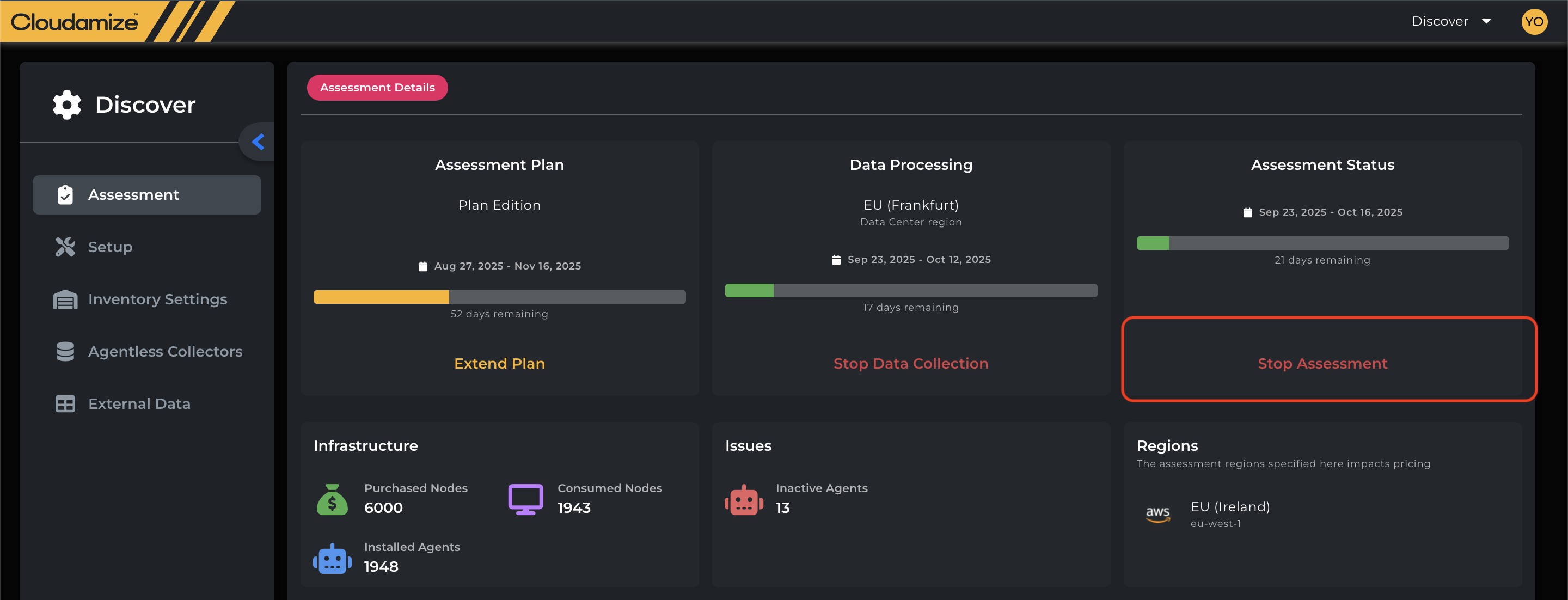
It is possible to stop a running Assessment during the Data Collection period. A “Stop Assessment” button is available during this time to perform this:
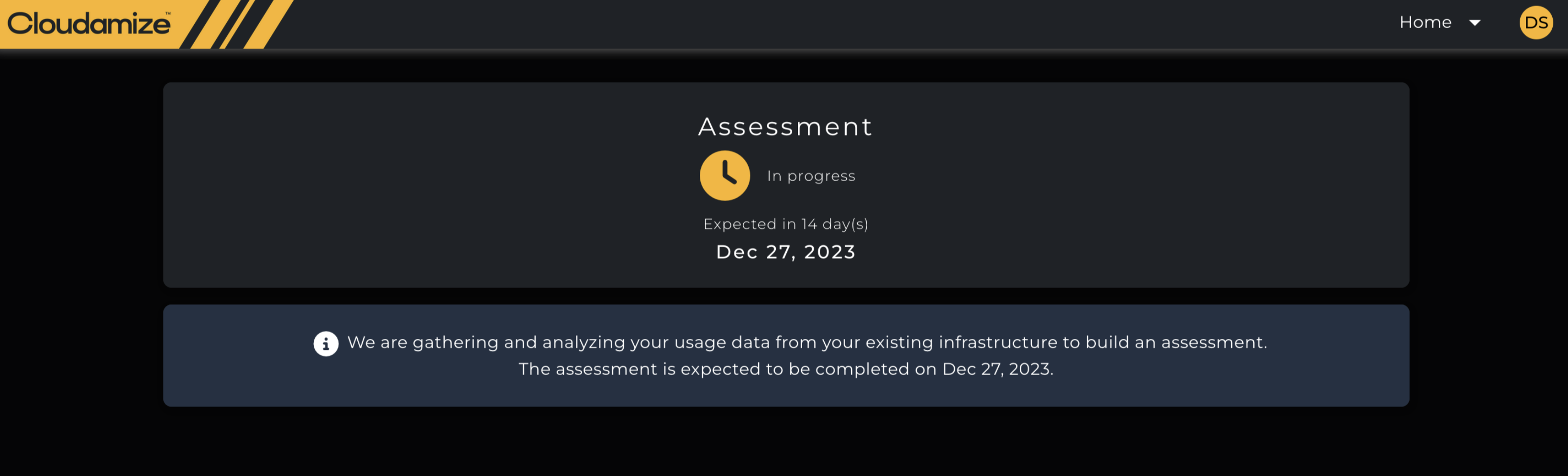
Finally, once started, your Assessment status will also be shown on the Console Landing Page:
Assessment Re-run Guidelines
For the re-run of an assessment, please review and acknowledge the following important information.
Important Considerations:
-
Existing Results Will Be Overwritten
Initiating a re-run will permanently overwrite all existing assessment results associated with the current assessment cycle. Once the re-run process has started, previous results and related data will no longer be available in the console and cannot be restored. -
Download Required Reports and Data
Before requesting a re-run, ensure that all required reports, exports, and assessment data are downloaded and securely stored for future reference. Data from the previous assessment cycle cannot be recovered after the re-run is initiated.
Next Steps:
Once you have reviewed the above information and confirmed your approval, the new assessment dates can be scheduled and the re-run process can be initiated.
If you have any queries, please get in touch with the helpdesk via our Helpdesk Portal or by email at helpdesk@cloudamize.com.