

Overview
The App Interconnectivity Report in Cloudamize provides a detailed map of how applications and systems communicate with each other across your IT environment. This is one of the most powerful features of the Cloudamize platform, enabling you to understand system dependencies, group workloads intelligently, and design cloud migrations with minimal risk.
The Application Interconnectivity feature in Cloudamize captures inbound and outbound traffic patterns, service dependencies, network connections, and more — delivering a real-time, actionable view of your application ecosystem.
This data is vital for cloud migration, application modernization, dependency analysis, and network architecture planning.
Steps to navigate to the App Interconnectivity Report:
-
Log in to the console: https://console.cloudamize.com/#/
-
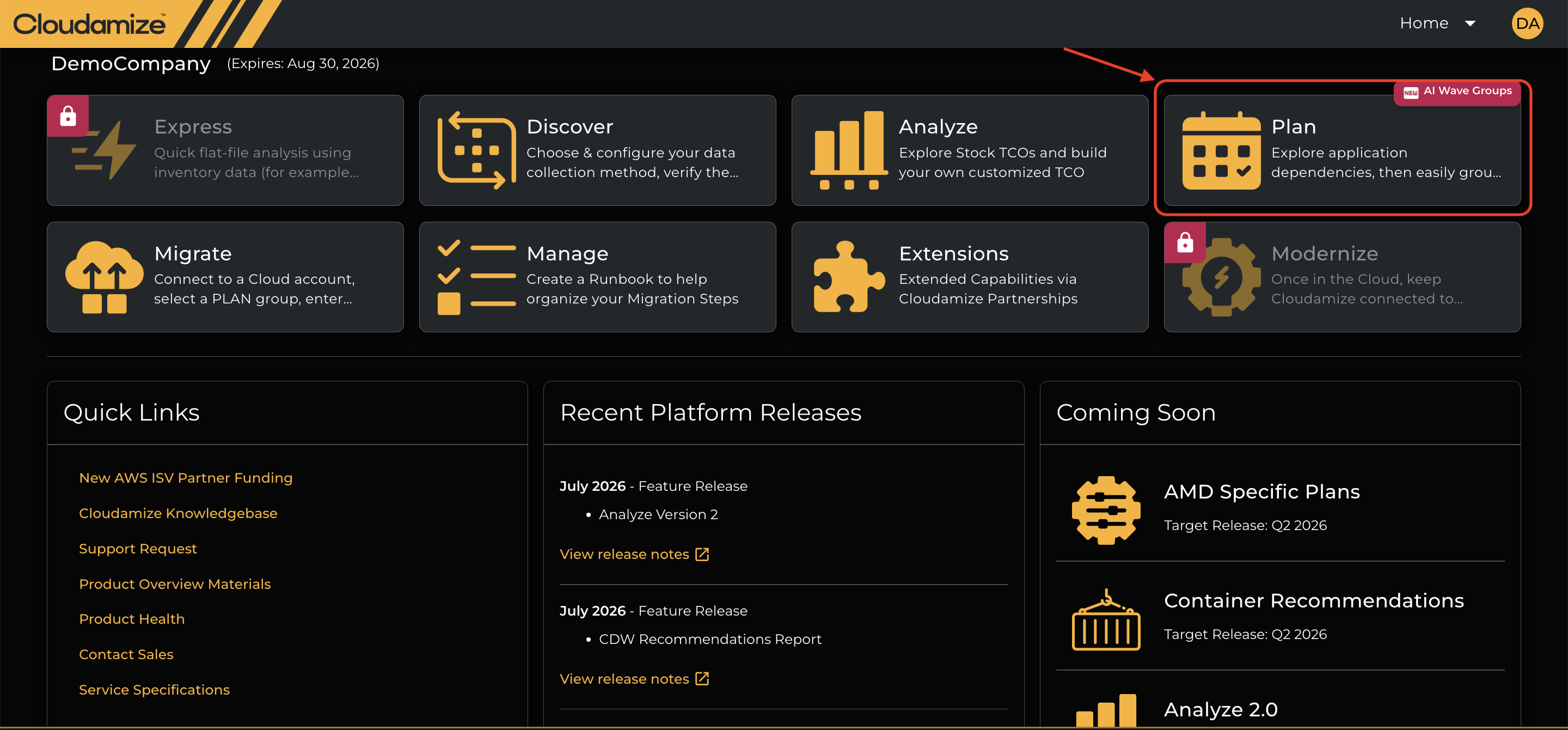
Navigate to the Plan page of your completed assessment.
-
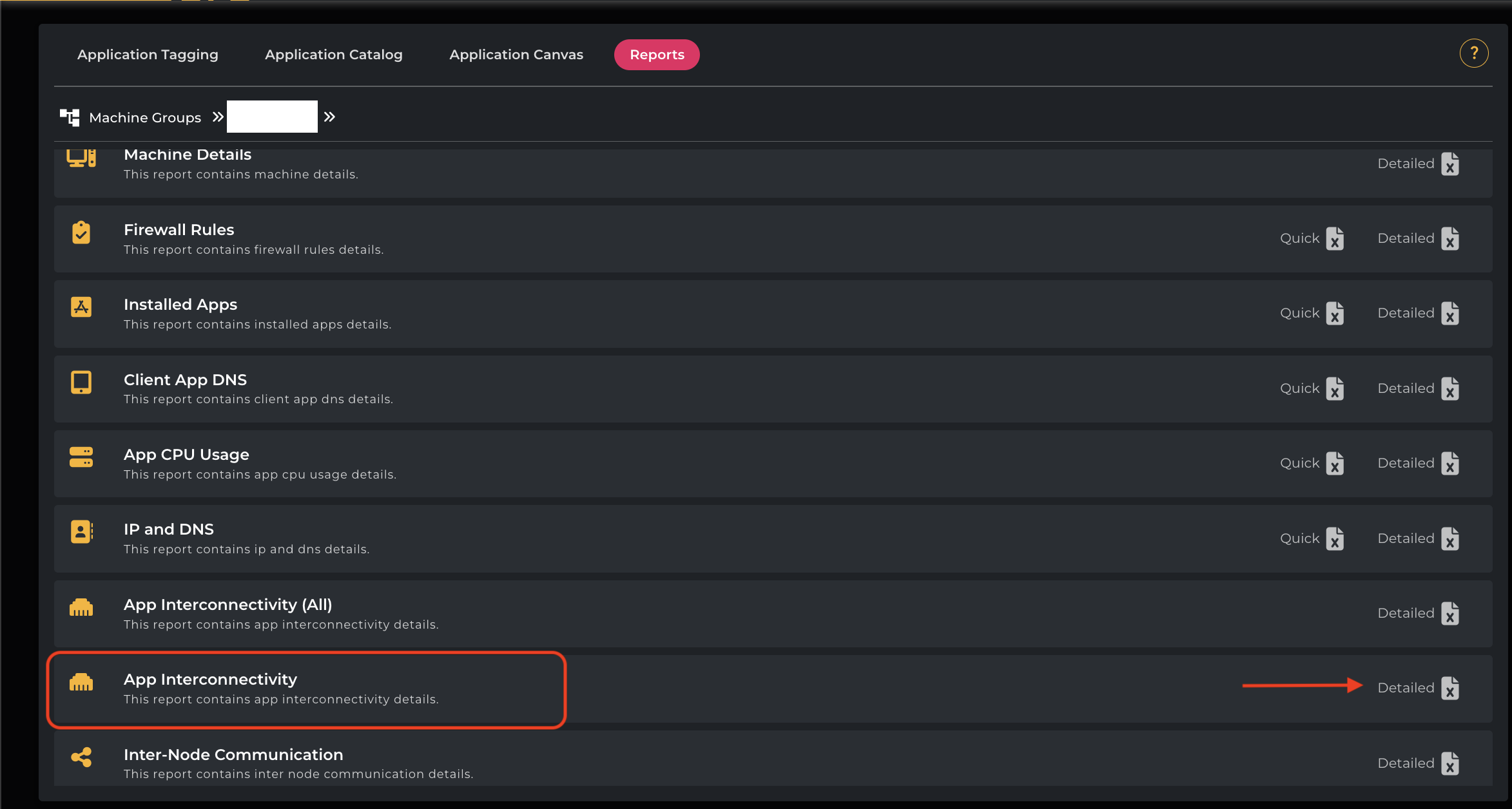
Under the “Plan” section, click “Reports” (as shown in the screenshot below).
-
Select “App Interconnectivity” → “Detailed” to download the report.
|
Column Name |
Description |
|---|---|
|
Client Group |
The logical group or business unit that the client system (initiating communication) belongs to. Grouping may be based on tags, resource groups, locations, or organizational units discovered during the scan. |
|
Client Asset |
The name of the asset (server, VM, or machine) that initiated the connection. This is often the hostname or system identifier detected by Cloudamize. |
|
Client Instance |
The specific instance name (e.g., VM name in AWS/Azure or on-prem) of the client asset initiating communication. Helpful for identifying virtualized or cloud-native deployments. |
|
Client Process |
The application or process running on the client machine that initiated the communication. This gives context into what software/service is making the connection (e.g., |
|
Server Group |
The logical group or business unit that the server system (receiving communication) belongs to. Helps understand application flows across environments, tiers, or departments. |
|
Server Asset |
The name of the asset (server, VM, or machine) that received the communication request. Typically, the hostname or system identifier of the server. |
|
Server Instance |
The specific instance name (e.g., EC2 instance, Azure VM, VMware guest) of the server receiving the connection. Useful in multi-instance or hybrid environments. |
|
Server Process |
The application or process on the server that responded to the connection. This could be a web server ( |
Example Report:
MigrationPlanner-AppInterconnectivity-Report.xlsx
If you have any queries, please get in touch with the helpdesk via our Helpdesk Portal or by email at helpdesk@cloudamize.com.